
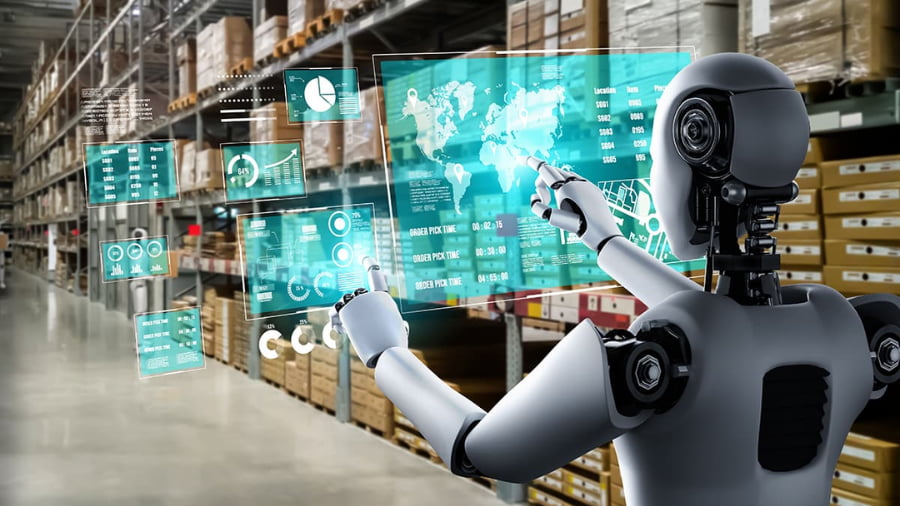
From Stockpiling To Smart Warehousing: How AI Is Reshaping Logistics In The Middle East

The international logistics landscape is going through a profound change. Conventional warehousing models, which are based on large stockpiles and manual procedures, are being quickly superseded by AI-powered, data-driven systems. Because of economic uncertainty and trade stress, companies are highly hesitant to stockpile inventories, adopting a wait-and-see system. In this new reality, AI and predictive analytics are rising as a big game changer, permitting companies to optimize inventory, decrease expenses, and enhance productivity.
Table of Contents
For the Middle East – one of the most vibrant centers for logistics in the world – change from stockpiling to smart warehousing shows a difficulty and an opportunity. With a huge acquisition in logistics structure, smart locations, and free zones, the region is amazingly positioned to become a leading one in AI-powered warehousing.
The Role of AI in Modern Warehousing
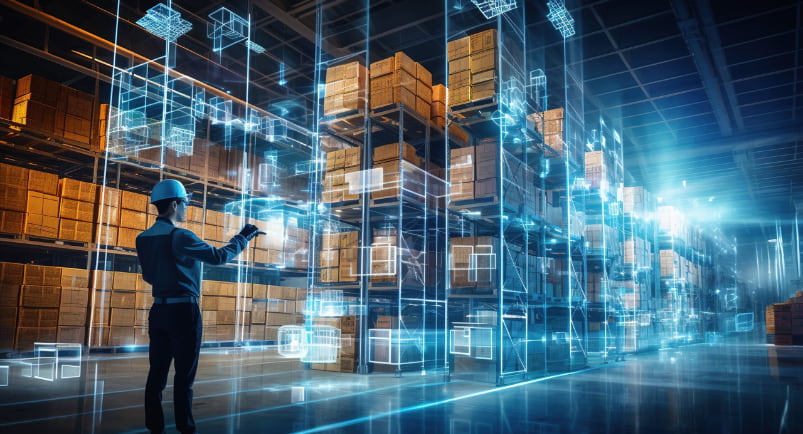
The thought of AI in warehousing in Dubai is not only about automation – it is about making an informed decision. AI-driven warehouses take advantage of a blend of machine learning, real-time analytics, and robotic automation to turn conventional storage facilities into highly effective fulfillment hubs. AI algorithms research historical data, external components, market trends, and other factors such as geopolitical and weather risks to accurately predict inventory requirements. This reduces overstocking and controls stockouts while optimizing warehouse structures and labor distribution.
Warehouse automation is another vital factor, simplifying the picking process of orders, sorting, and packing while remarkably decreasing human mistakes and labor costs. AI integrates with warehouse management systems to make sure just-in-time completion, decrease idle inventory, and enhance functional productivity. AI models can also predict energy consumption ways, assisting in lowering functional expenses and reducing environmental effects. The possibility for AI-driven warehousing in the UAE is clear.
Why AI-Driven Warehousing Matters
The strategic location of the Middle East makes it a vital leader in international trade, with logistics centers in Jeddah, Dubai, and Doha working as doors between Europe, Asia, and Africa. The region is already making investments on a heavy basis in smart logistics structure, with the UAE and Saudi Arabia reserving the right to lead the thorough procedure.
DP World of Dubai has embraced AI in its Jebel Ali Free Zone, incorporating AI-powered monitoring and automated storage solutions. The dedication of the country to smart logistics is proof in its country’s AI strategy and supports such as the Silicon Oasis Smart City Project of Dubai. In the Vision 2030, Saudi Arabia is making investments in AI-driven logistics, specifically in its Neom projects, which sets the target to be the first completely automated supply chain city in the world. Oman and Qatar are also taking advantage of AI to enhance warehousing functions in their free zones, making them enticing to international companies that are in search of regional allocation hubs.
With this kind of infrastructure in place, the Middle East is on its way to becoming an AI-powered logistics center. However, AI transformation in warehousing is not only about infrastructure; it demands proficient talent, smooth integrations, and strategic planning.
The AI Benefits in Modern Warehousing
1. Smarter Inventory Forecasting
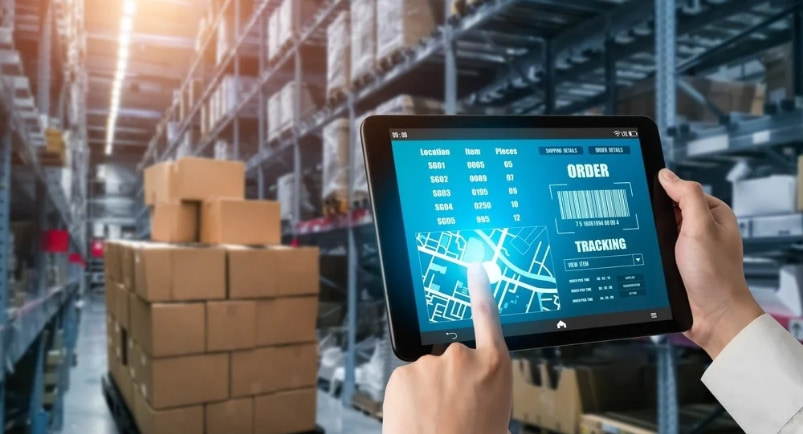
Conventional warehouse management based on manual examinations and previous data usually causes overstocking or stockouts. In 2025, AI will utilize predictive research to forecast needs more precisely by researching sales movements, seasons, market transformations, and even weather shifts. This smart forecasting assists companies in maintaining optimal inventory levels. The result is good planning, reduced charges, and enhanced client pleasure.
2. Autonomous Warehouse Robotics
AI-powered robots are now leading the way as they become a useful part of warehouse functions in 2025. From picking and packing to sorting and palletizing, machines now manage repetitive jobs with pace and accuracy. These robots constantly understand from data, enhancing their productivity over time. Consequently, warehouses work quickly, with fewer mistakes and reduced labor expenses.
3. AI + IoT = Real-Time Visibility
In 205, the mist of IoT and AI has turned warehouses into smart, linked ecosystems. Sensors gather real-time information on temperature, the health of tools, and inventory movement, while AI researches it immediately. This provides managers with thorough visibility and control over functions. Consequently, this provides quicker decisions, more periodic mistakes, and enhanced productivity.
4. Computer Vision for Quality Control
Computer vision driven by AI is transforming warehouse quality control. AI-guided high-speed cameras can identify flaws, damaged items, and label mistakes in a matter of seconds. Compared to manual checks, this enables quicker and more precise inspections. As a result, inspection time and human error are decreased while product quality increases.
5. Workforce Augmentation, Not Elimination
Instead of replacing human employees, AI in 2025 is improving their activities and productivity. With equipment like I-driven wearables and voice-assisted picking methods, teams get real-time suggestions and support throughout tasks. Training has also grown through AI-guided AR/VR simulations that assist teams to understand quickly and adapt swiftly. AI works as a digital co-worker, permits staff to pay attention to making decisions, monitoring, and constant growth.
Challenges to Implementation
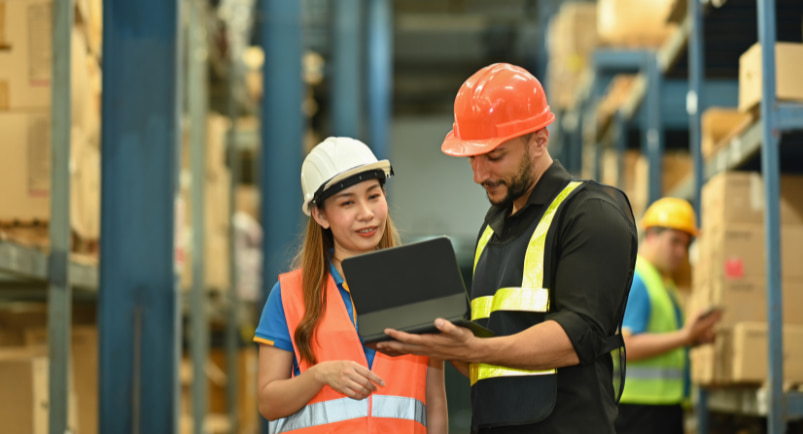
Even though AI-driven warehousing has the potential to be beneficial, it also comes with its own set of challenges. A huge investment amount remains a remarkable hurdle, as AI adoption demands significant investment in robotics, management systems for warehouses, and data infrastructure. A number of warehouses in the Middle East still depend on legacy methods, and incorporating AI-driven solutions is difficult.
The region also faces a lack of AI professionals, data scientists, and logistics experts who have proficiency in AI-driven functions. Regulatory concerns give another level of difficulty, as governments need to find out the considerations associated with data security, cybersecurity, and staff displacement.
To handle these difficulties, businesses need to build long-term AI adoption methods, make investments in skill development, and cooperate with technology providers to make sure smooth integration.
The Future of AI-Driven Warehousing
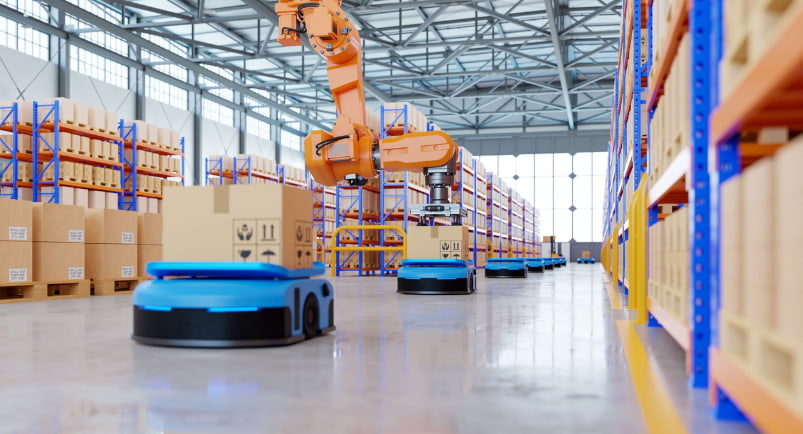
AI-powered logistics centers are no longer a distant reality – they are becoming vital to the international supply chain. With its strategic site and friendly guidelines for investment, the Middle East has the possibility to become a leader in AI-driven warehousing. As labor expenses grow, enhanced adoption of robotics, the adoption of IoT sensors for real-time monitoring, and blockchain for clear supply chain administration are expected.
Saudi Arabia and the United Arab Emirates are likely to set up more AI-driven logistics centers, enticing international e-commerce and manufacturing leaders. Government-led AI support will constantly drive further AI adoption in the logistics industry.
Taking the Next Step

The warehousing future in the Middle East is technical, automated, and AI-driven. As international supply chains become stronger, logistics businesses need to adapt to stay competitive. AI gives a chance to revolutionize storage, optimize productivity, and decrease prices, but the region needs to work on a current basis.
For companies in the Middle East, the option is clear: welcome AI and become the leader of the next generation of logistics, or fall behind in an increasingly digital world.